

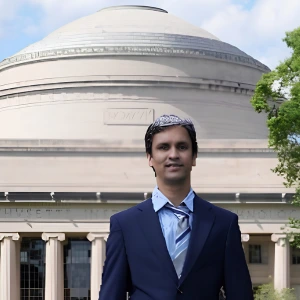
Monochura Saha
Birla Institute of Technology, IndiaPresentation Title:
Wireless nanoelectronics therapy for brain cancer
Abstract
Brain cancer remains one of the most challenging malignancies to treat because of its highly invasive nature, therapeutic resistance, and the limited efficacy of conventional treatment modalities. Here, we present a wireless nanoelectronic therapy platform that enables localized, noninvasive electrical stimulation to treat brain tumors. The system utilizes implantable nanoelectronic devices that generate therapeutic electric fields without wired connections, thereby enabling sustained, targeted modulation of the tumor microenvironment. In vitro studies demonstrated approximately 60% tumor cell killing following wireless electrical stimulation, indicating potent antitumor activity. In an orthotopic preclinical brain tumor model, treatment with the wireless nanoelectronic platform resulted in an approximately 50% improvement in overall survival compared with untreated controls. These findings demonstrate the potential of wireless nanoelectronic therapy as a minimally invasive and effective strategy for brain cancer treatment. This technology offers a promising alternative or adjunct to existing therapies and establishes a foundation for the development of next-generation bioelectronic approaches for precision neuro-oncology.
Biography
Monochura Saha completed his PhD at the Indian Institute of Science Education and Research (IISER) Kolkata, India, followed by four years of postdoctoral research at the Massachusetts Institute of Technology (MIT), USA. He is currently an Assistant Professor in the Department of Chemistry at the Birla Institute of Technology (BIT), Mesra, Ranchi, India. His research focuses on the development of advanced nanomaterials, bioelectronics, and translational nanomedicine for healthcare applications. He has published over 22 peer-reviewed research articles, which have received more than 850 citations, with an index of 14. He serves as a Science Advisory Member for a USA-based organization and is an Editorial Board Member of several reputed international journals.

Organization Location
1309 Coffeen Avenue, STE 1200, Sheridan, Wyoming 82801, USA
General Enquiry
contact@scientexconferences.com
Finance Enquiry
finance@scientexconferences.com
Call us at
USA : (+1) 725 228 9352